The Hidden Load: How Emergency Response Work Can Build Up Over Time
People who work in emergency response are trained to stay steady under pressure.
They learn to act quickly, think clearly, and keep moving when other people freeze. They get used to functioning in situations that are physically intense, emotionally charged, and sometimes dangerous. They are often the calmest person in the room when things go wrong.
From the outside, that can look like strength without cost.
But over time, the work can leave a load behind.
Not always in dramatic ways.
Not always in ways that are easy to explain.
And not always in ways that look like a crisis.
It often shows up in other ways.
A shorter fuse.
Trouble sleeping.
Difficulty coming down after shift.
Feeling flat at home.
Being less patient with people you care about.
Not wanting to talk.
Feeling like there is no point in trying to explain what you carry to anyone who has not lived it.
This is one of the reasons cumulative stress matters so much in first responder, mine rescue, SAR, and fire service work.
It is not always one incident
When people hear the word trauma, they often think of one major event.
Sometimes that is part of the picture. But for many people in emergency response roles, the bigger issue is not always one call, one scene, or one moment. It is the buildup that happens over time.
It is the repeated exposure.
The calls that stay with you a little longer than expected.
The tension that does not fully leave your body.
The things you saw and moved on from because you had to.
The years of being the one who handles it.
The habit of pushing everything down because there is still more work to do.
A lot of strong, capable people do not realize how much has been building until they notice the effects somewhere else. They may notice changes in their sleep, their relationships, their patience, their energy, or their ability to feel fully present.
High-functioning does not mean unaffected
One of the challenges in this kind of work is that many people are still performing well while carrying a lot.
They are still showing up.
Still doing the job.
Still handling responsibility.
Still getting through the day.
So they tell themselves they are fine.
And in some ways, they are.
But functioning well and carrying too much can exist at the same time.
That is part of what makes cumulative stress easy to miss.
You do not have to be falling apart to be feeling the cost of the work.
You may simply notice that:
- it is harder to relax than it used to be
- your body stays on edge longer
- your patience is thinner
- you feel emotionally flatter or more shut down
- home feels harder than it should
- you would not know how to talk about it even if you wanted to
That does not mean you are weak.
It does not mean you are not resilient.
And it does not mean you are not good at your job.
It may simply mean the load is getting heavier.
The cost of staying strong all the time
Many of the qualities that help people in emergency response roles do matter.
Stoicism can be useful.
Compartmentalizing can help you function.
Dark humour can release pressure.
Self-reliance can get you through difficult situations.
These are not flaws.
But when those same strategies become the only way a person copes, they can start to cost more than they help.
The ability to shut things down at work can become emotional distance at home.
The ability to push through can turn into never slowing down.
The habit of handling it yourself can turn into isolation.
The pressure to stay steady can make it harder to admit when something is building.
Over time, many people start feeling more disconnected from themselves, from other people, or from the parts of life that used to feel easier.
Often, the job stress shows up at home first
A lot of people in first responder, mine rescue, SAR, and fire service roles do not think of themselves as struggling.
What they notice first is that home feels different.
They are more irritable.
They want less conversation.
They need more space.
They feel less patient with their partner or family.
They do not want to be touched, asked questions, or pulled into more demands after shift.
Or they realize that even when they are physically home, part of them still feels elsewhere.
This can create tension in relationships, especially when the other person does not fully understand why the shift from work mode to home mode feels so hard.
It can also increase shame.
A person may think, “Why am I so short lately?”
Or, “Why do I feel so flat?”
Or, “Why can I handle work but not this?”
The answer is often that you’ve been holding so much for so long.
It is cumulative load.
Why people often do not talk about it
There are good reasons many emergency responders do not open up easily.
Some do not want to burden people at home.
Some do not want to sound dramatic.
Some do not trust that people outside the work will understand.
Some are worried they will be seen differently if they admit how much they are carrying.
And some simply do not have the language for it.
A lot of people have spent years learning how to control themselves, keep going, and avoid making things bigger than they need to be.
That can make support harder to reach for, even when it would help.
It is one reason why support needs to feel credible, practical, and respectful of the culture of the work.
Not soft.
Not performative.
Not overly clinical.
And not based on the assumption that someone has to be in crisis before support makes sense.
Recovery needs to fit the culture of the work
Generic advice often does not land well in emergency response settings.
If someone is carrying a lot of stress and trauma exposure, being told to “do more self-care” usually does not go very far.
What helps more is support that recognizes the reality of the job and offers practical ways to recover.
That may include:
- recognizing your own early signs of overload
- understanding what makes it hard to come down after shift
- building realistic decompression routines
- improving the transition from work mode to home mode
- finding a way to talk that feels controlled and not like spilling everything
- getting support before the cost gets harder to ignore
Recovery is not about becoming fragile.
It is about staying effective without having to carry everything alone.
You do not need to be in crisis to take this seriously
This is one of the biggest misconceptions in high-pressure work.
A lot of people assume support is only for the point where things have become unmanageable.
But many of the strongest people seek support much earlier than that.
Not because they cannot cope.
Because they want to keep coping well.
Because they want to protect their relationships.
Because they want to stay steady without becoming shut down.
Because they can feel the buildup and do not want to wait until it costs more.
That is often the most grounded reason to take cumulative stress seriously.
A practical conversation worth having
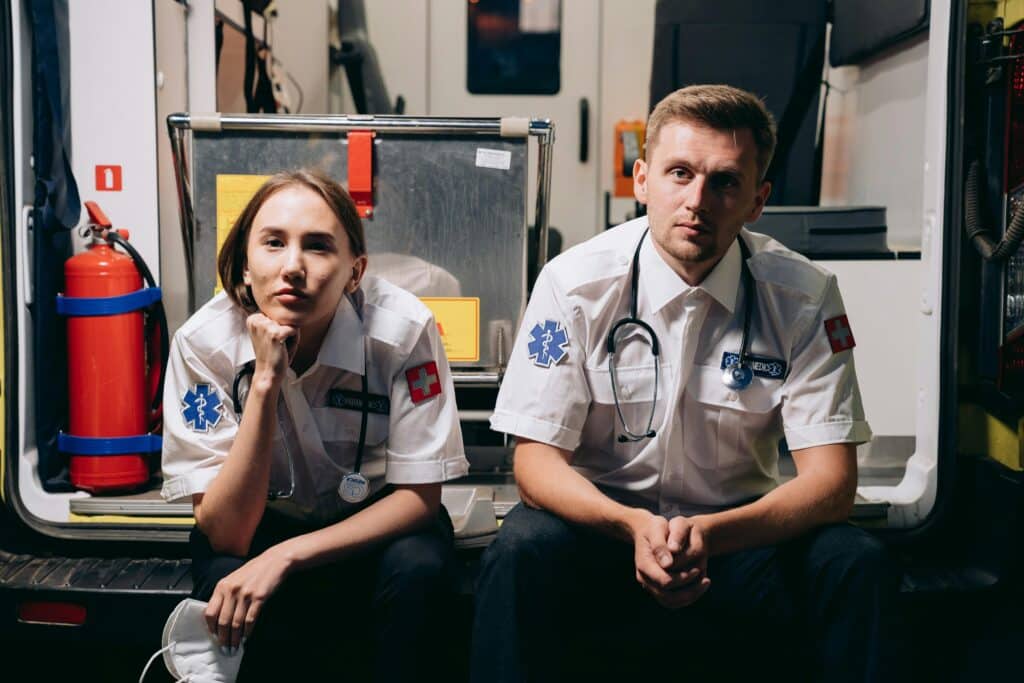
This is exactly why we created a customized practical program for first responders, mine rescue personnel, SAR members, firefighters, and others working in emergency response roles.
The program is designed to explore:
- how cumulative stress and trauma exposure build up over time
- how the work can follow people home
- the hidden cost of staying tough all the time
- practical recovery and resilience strategies that fit emergency response culture
- how to recognize overload earlier and know when more support may be useful
It is designed to be direct, useful, and grounded in real emergency response experience.
If this topic resonates
If you are reading this and recognizing yourself in some of it, contact me by email for more information, or explore more about individual counselling or couples counselling .