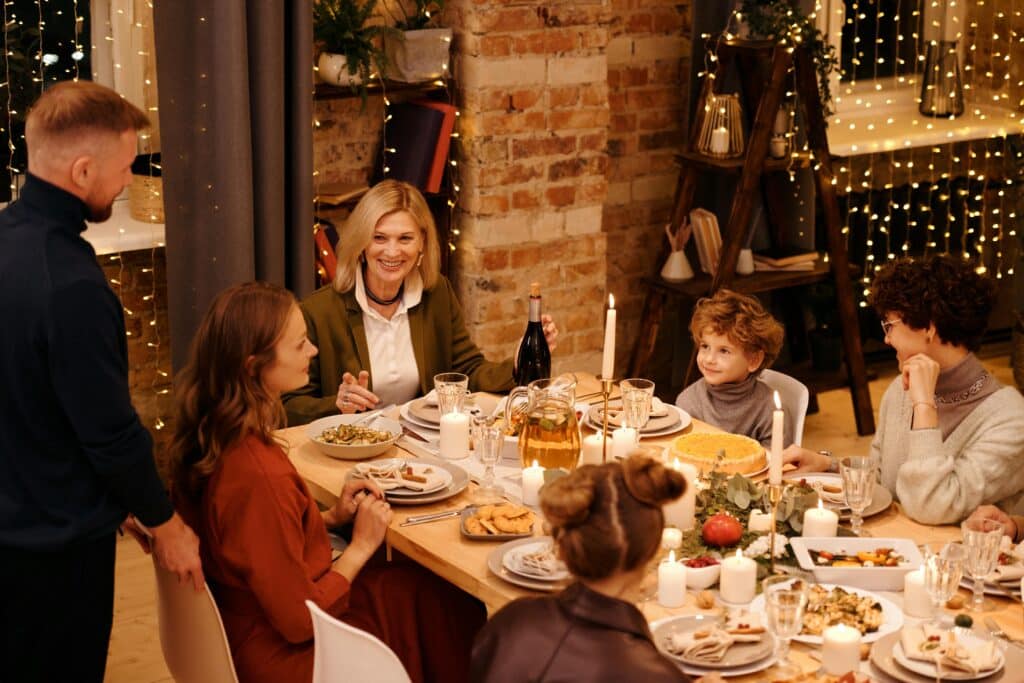
You look forward to them – family gatherings – seeing people that you love, reconnecting with family. Yet, part of you might also feel a certain amount of dread or uncertainty as well.
Most people don’t walk into family gatherings thinking “This is going to be stressful.”
They walk in hoping it will be fine.
And then- sometimes gradually, sometimes suddenly – they feel tense, tired, or oddly on edge, without being able to point to a single obvious reason why.
If that’s been your experience, it doesn’t mean you’re overly sensitive or doing something wrong. Family gatherings carry multiple layers of stress, many of which have nothing to do with conflict or “bad relationships.”
Here are some of the most common reasons family time feels harder than expected – and a few ways to make it gentler on yourself.
1.Why familiar roles can resurface - even when you’ve grown
You might feel confident and capable in daily life, then notice yourself feeling quieter, younger, or more reactive around family.
One person described it as, “I forget who I am for a moment, and suddenly I’m back in an old role I thought I’d outgrown.”
That doesn’t mean you’ve regressed. It means history has a strong memory.
What helps: Remind yourself that you don’t have to play the old part anymore. You can respond differently, speak less, or simply observe without engaging. Growth doesn’t mean the feeling never appears; it means it doesn’t get to run the evening.
2. Releasing expectations of how family time “should” feel
There’s often an unspoken idea of how gatherings should feel – warm, meaningful, harmonious.
We get these expectations from movies, social media and from relatives and friends.
When reality doesn’t match that picture, people can feel disappointed or tense, even if nothing is technically “wrong.”
What helps: Lower the bar from “This should be great” to “This just needs to be manageable.” Letting go of the pressure for things to feel a certain way often brings more ease than trying to make it happen.
3. Important gatherings can feel tiring
Travel, hosting, hosting-adjacent helping, or being “on” socially can throw people off balance.
Even enjoyable gatherings require emotional effort- listening, responding, smoothing things over, staying engaged. That can add stress – even when you don’t realize it.
What helps: Build in small moments of rest. Step outside. Sit quietly for a few minutes. Give yourself permission to disengage briefly without explaining why.
4. Navigating questions and comparisons with steadiness
Family questions often focus on life milestones – work, relationships, plans, progress.
Even well-intended questions can trigger comparison or self-doubt.
What helps: You don’t have to provide detailed updates or justifications. Short, neutral answers are enough. Then, if you like, you can easily redirect the conversation by asking a question or gently changing the topic. If the person persists, simply say “Hey, I’m not feeling ready to talk about that at the moment.”, and then (smoothly) ask a question about them.
5. Busy environments affect us more than we realize
Noise, overlapping conversations, cluttered spaces, unfamiliar environments – these all add up.
Many people don’t realize they’re overwhelmed until they’re already exhausted.
What helps: Notice your sensory limits. Taking breaks, finding quieter spaces, or stepping outside can reset your nervous system more than pushing through.
6. When celebrating takes extra energy
If you’re hosting, or even co-hosting, you’re often managing logistics and emotions at the same time.
That’s a lot to hold.
What helps: Let “good enough” be enough. Everything doesn’t need to be perfect for connection to happen. Reducing your own expectations can dramatically lower stress.
7. The quieter stressors people often carry
Costs, schedules, travel plans, and gift expectations don’t disappear just because the gathering is meant to be enjoyable.
Stress often comes along quietly.
What helps: Name these pressures to yourself, even if you don’t say them out loud. Simply recognizing that you’re carrying extra load can soften self-judgment and help you pace yourself.
8. Outside life doesn’t pause for family time
Work stress, burnout, personal challenges, or big life changes don’t stay neatly at home.
They come with you.
What helps: Lower your expectations for emotional availability. You don’t have to be your most patient, present self at all times. Showing up imperfectly still counts.
9. The effort of staying “on”
Many people feel pressure to appear cheerful, relaxed, or “fine,” even when they aren’t.
That kind of masking takes energy.
What helps: Give yourself permission to be neutral. You don’t have to perform happiness to belong.
10. How to manage unexpected reactions
Certain smells, foods, traditions, or moments can stir feelings without a clear explanation.
That doesn’t mean you’re fragile – it means memory lives in the body as well as the mind.
What helps: Ground yourself in the present moment. Look around. Name where you are now. Small grounding reminders can help your body catch up to the present.
A new gentler definition of success
One of the most relieving shifts is redefining what a “successful” family gathering looks like.
Success might mean:
having neutral, steady conversations
showing interest and caring for others
letting go of the need to please others or care too much about their opinions
stepping outside for a quiet break, if you need to, without guilt
letting go of the things you cannot control, and focusing on what you can control
staying as long as feels good for you
driving home without replaying everything in your head
Are You In An Emotionally Abusive Relationship? Emotionally abusive relationships are a pattern of behaviour by one or more people that slowly destroys the self confidence of the victim. It…
Reconnecting Hearts: How a Gottman Couples Therapist Can Help Your Relationship Thrive Considering a Gottman Couples Therapist for your relationship? I’m glad you’re here. Taking a step toward strengthening your…
Newly-Wed Counselling | Build a Marriage that lasts a Lifetime | Couples Counselling for Happy Marriages Discover how newly-wed couples counselling and pre-marital counselling can strengthen your bond, align your…
Relationship Gifts That Aren’t Candles or Socks (although I really love candles & socks) Every year, I have the same moment. Seriously, it happens to me every Christmas. It’s like…